Small Yard, Big Living: Designing an Outdoor Room That Feels Expansive
A compact yard can live far larger than its footprint. These are the planning moves we use to turn a tight patio into a genuine outdoor room.
Roofing & Solar
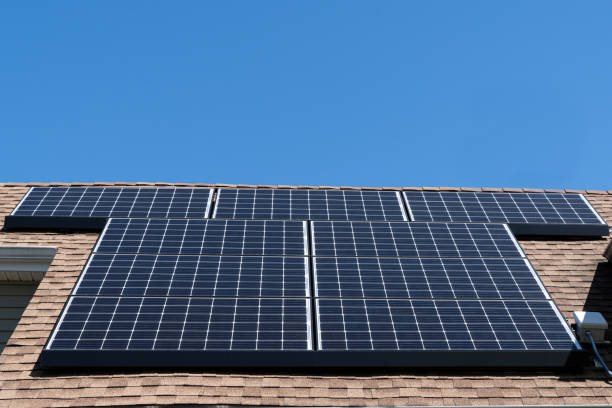
Solar panels are only as good as the roof beneath them. Get the sequence wrong and you can void a manufacturer warranty, pay twice for installation or delay your switch-on by months. Here is how we plan these two upgrades so they strengthen each other.
Panels are mounted on rails fixed through your roof covering into the structure below. If the roof is replaced after the solar array goes up, the entire array must be removed, stored and reinstalled, and the roofers will not cover the holes they did not make. Doing the roof first — or at least assessing it honestly — is almost always the cheaper path.
The reverse mistake is also common: homeowners replace a roof and only later learn that the new covering is difficult to mount on, or that attic ventilation changes would have been easier to include while the deck was open.
Before any solar conversation, ask for a roof inspection covering the remaining service life of the covering, the condition of decking and flashing, the state of the ridge and valley areas, and whether the attic ventilation is adequate. A solar-ready roof should also have a documented path for conduit from the array to the inverter and main panel.
Solar panels can last for decades, which is why we plan arrays around a roof that will outlast or match them.
If the roof is already nearing the end of its service life, replace or recover it before solar installation. Choose a covering rated for the mounting system you intend to use, and ask the installer to seal or flash all penetrations to specification.
While the roof is open it is also the ideal moment for ridge ventilation upgrades, ice-and-water protection in valleys and eaves, and improved insulation in the attic — all of which support the performance case for going solar in the first place.
A good solar layout respects roof geometry: panel placement avoids shaded chimneys and vents, keeps a maintenance walkway where required, and keeps wiring runs short. It also anticipates the future — leaving space for a battery, or for additional panels if your household energy use grows.
Ask for the production estimate in writing, along with the assumptions behind it: orientation, tilt, shading and expected degradation.
Solar work involves an interconnection application, an inspection and a permission-to-operate milestone from your utility. Roofing work, meanwhile, may involve permits and HOA approval. Running these processes at the same time is what keeps a combined project on schedule instead of stalling at the finish line.
Keep every document — permits, inspection sign-offs, product warranties and the installation contract — in one folder. You will need them if you ever sell the home.
Roof warranties can be affected by penetrations that were not installed to the manufacturer's requirements, and solar warranties often require the mount to remain untouched. The safest approach is a written plan that names who is responsible for the roof surface, who signs off on flashing, and what happens if a leak appears near a mount point.
Ask both trades one blunt question before signing: if water appears at a mounting point, who owns the repair? A clear answer, in writing, tells you a great deal about the team you are hiring.
Request the roof assessment in writing, with photographs. Ask for the manufacturer specifications for both the roof covering and the mounting hardware, confirming they are compatible. Confirm the credential of anyone working on electrical connections, and ask for a single project schedule that shows roof completion before array installation.
Finally, ask about monitoring. Understanding your production data early means you can spot underperformance quickly and raise it while warranties are fully in force.
Planning this upgrade yourself? We are happy to help you think it through. Book a free consultation and a Outdoor Living Hubs advisor will review your space, priorities and budget with you — no pressure, no obligation.
Keep Reading
 Outdoor Living
A compact yard can live far larger than its footprint. These are the planning moves we use to turn a tight patio into a genuine outdoor room.
 Home Safety
Safety upgrades work best as a single plan, not scattered purchases. Walk through your home with this room-by-room checklist.